Water in the LR3 passenger footwell: find the entry point
Trace when and where water enters before blaming the sunroof or ordering a drain tube.
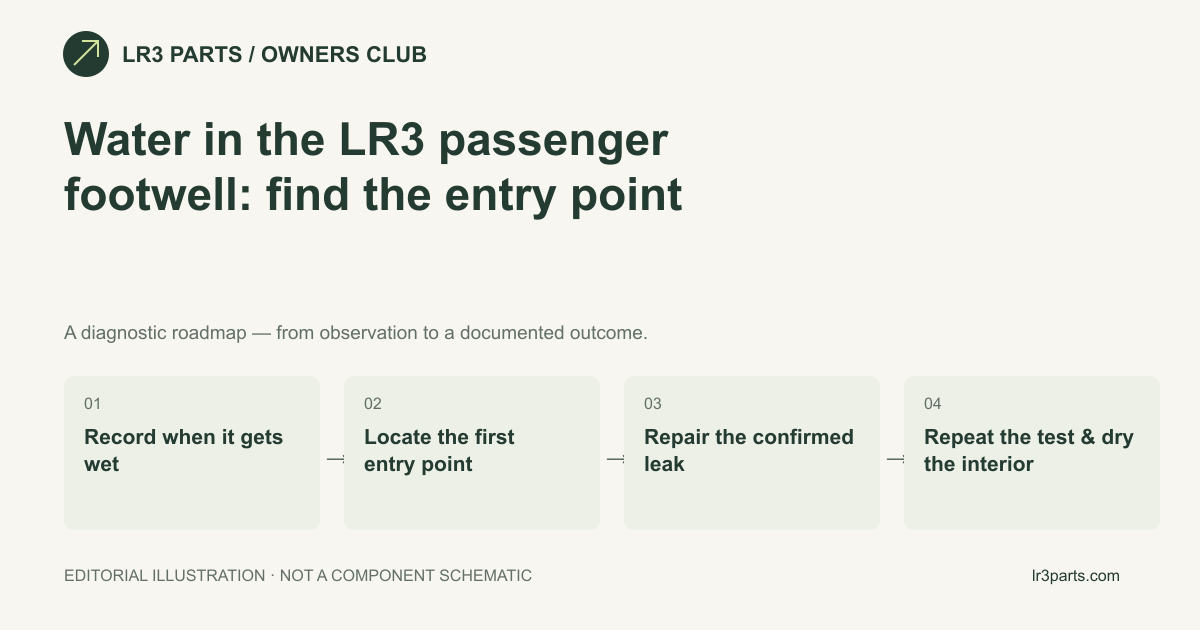
- Record when it gets wet
- Locate the first entry point
- Repair the confirmed leak
- Repeat the test & dry the interior
Editorial roadmap, not a component schematic.
Record the conditions first
Note whether the wetness follows rain, a wash, or a dry-weather drive. Photograph the first damp area you can see and record which side and whether the front or rear floor is affected. Remove loose mats to inspect the visible floor without disturbing wiring or trim. Water found on the floor does not, by itself, establish where it entered.
Use the factory bulletin as a starting point
Land Rover issued bulletin LA-501-012, issue 2, dated March 14, 2006, for passenger-compartment water ingress. It calls for locating the origin before corrective work and includes a sunroof-drain test. The listed range begins at VIN 5A000360; ask a specialist to confirm applicability and the current procedure for your vehicle. The bulletin identifies investigation routes, not a diagnosis for every wet LR3.
Check a sunroof drain carefully, if appropriate
The bulletin describes checking drainage one corner at a time and confirming discharge at the corresponding outlet. If you can reach the visible water trap safely and understand the applicable procedure, use a small, controlled amount of water while someone observes the outlet and interior. Stop immediately if water backs up or enters the cabin. If access or the drainage route is unclear, have the workshop perform the test. Do not flood the roof to force a result.
Do not turn a suspected blockage into another leak
Avoid improvised compressed-air blasts, sharp wire, or pushing tools down an unseen hose. A drain complaint needs a check of flow and hose condition before deciding what to replace. If drainage appears normal, ask the workshop to continue tracing the entry point rather than replacing drain parts speculatively. Note any recent glass, roof, or body work as useful context.
Match the repair to the finding
A confirmed blockage, a damaged hose, and a disconnected or incorrectly routed drain call for different corrective work. Ask the specialist to document the finding, restore the drainage path using the correct procedure, and repeat the test. Have any other confirmed seal or body-entry fault addressed at its source. Keep the part number and photographs where practical; do not assume a replacement sunroof seal is the answer.
Drying is part of finishing the job
Arrange thorough drying and an inspection of affected areas after the entry point is repaired. A dry surface does not demonstrate that material underneath is dry. If electrical warnings or wet connectors are found, have a qualified technician assess them rather than disconnecting equipment at random. Recheck after comparable rain or a controlled workshop test, and record the outcome.
Share a result another owner can use
Include your model year, the weather or test that reproduced the leak, the first entry point found, the corrective work, and the follow-up result. Label a theory as a theory until it is confirmed. Your completed repair story can make this guide more useful without turning one owner’s experience into a universal fix.
Common questions
Is a wet LR3 footwell always caused by a sunroof drain?
No. Wetness on the floor does not establish the entry point. Record whether it follows rain, washing, or dry-weather driving, and trace the origin before ordering parts.
What does Land Rover bulletin LA-501-012 cover?
Issue 2, dated March 14, 2006, addresses passenger-compartment water ingress and includes testing sunroof drainage. Its listed vehicle range begins at VIN 5A000360. A specialist should confirm applicability and the current procedure.
Keep reading
What happened on your truck?
Help turn a question into a documented outcome. Suggest a correction if something in this guide needs updating.
Submit your fix